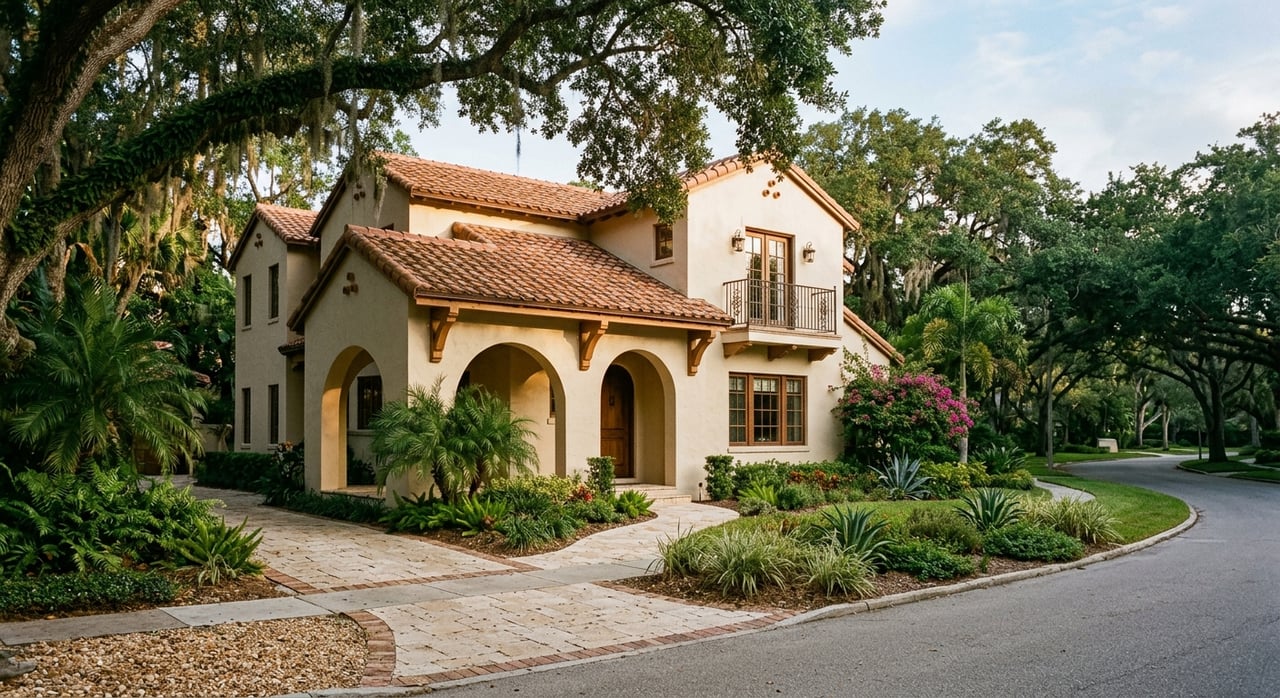
Trying to decide between a newer master-planned community and an older established neighborhood in Port St. Lucie? You are not alone. Many buyers are weighing bundled amenities, HOA structure, home style, and maintenance expectations before they make a move. The good news is that Port St. Lucie gives you both options, and each can work well depending on your goals. Let’s break down what really separates these neighborhood types so you can compare them with confidence.
How Port St. Lucie Defines Each Option
Port St. Lucie’s planning framework makes an important distinction between newer planned developments and the city’s original platted areas. The city describes planned unit developments as a tool for newer neighborhoods that can set lot sizes, setbacks, and similar standards while emphasizing open space, recreation, and a coordinated physical environment.
By contrast, the original platted city was created by General Development Corporation from the 1950s through the 1980s, largely as single-family lots with minimal infrastructure. The city identifies planning areas 1, 2, 3, 4N, 4S, 5, 6, and 7 as part of that original platted city, while areas such as Tradition, Southern Grove, Western Grove, Riverland, Wilson Groves, and some US 1 parcels are outside that original pattern.
In practical terms, that means the comparison is less about which option is "better" and more about how each area was built and managed. Port St. Lucie includes traditional suburban neighborhoods, newer mixed-use neighborhoods, and newer growth corridors, so your best fit depends on the kind of daily life you want.
What Master-Planned Communities Offer
Master-planned communities in Port St. Lucie are designed to bring a lot of everyday convenience into one coordinated setting. That often means shared recreational spaces, walking paths, neighborhood gathering areas, and a more uniform look and feel from one section to the next.
Tradition is one of the clearest examples. Its official community information highlights more than 500 acres of lakes, over 300 acres of parks and nature preserves, a Town Center, and housing options that include both townhomes and single-family homes. It also features programmed events, live music, a weekly farmers market, and an amphitheater, which can create a more built-in neighborhood rhythm.
Riverland is another strong example of the master-planned model. GL Homes describes it as a 4,000-acre community with more than 100,000 square feet of amenities, including a 24-acre Sports & Racquet Club, a 51,000-square-foot Wellness & Fitness Center, a 5-acre Arts & Culture Center, multiple city parks, a Town Center, and greenways and Paseo paths that connect different parts of the community.
For many buyers, that kind of design creates predictability. You can often expect newer infrastructure, cohesive landscaping, and amenities that are planned from the start rather than added later.
Common Advantages of Master-Planned Areas
- Built-in amenities such as pools, trails, parks, and gathering spaces
- More coordinated community design
- Often newer homes and infrastructure
- Multiple housing formats within one larger community in some developments
- Clearer neighborhood identity with defined common areas
What Established Neighborhoods Feel Like
Established neighborhoods in Port St. Lucie are usually more varied. Because they were not created as one integrated campus, they often have a broader mix of lot sizes, build years, exterior styles, and renovation histories.
That variety can be appealing if you want a neighborhood that feels less uniform. In the original platted parts of the city, you may find homes built across several decades, which can create more visual and architectural range from one street to the next.
The city’s planning and maintenance efforts in older areas also tend to focus on specific neighborhood groups rather than one master association structure. That is one reason established neighborhoods can feel more individual in character. Instead of one bundled amenity package, each subdivision or street pattern may function a little differently.
Common Advantages of Established Areas
- Wider range of home ages and styles
- More variation in lot layout and renovation potential
- Neighborhood character that can feel less standardized
- HOA structure may be lighter or more subdivision-specific in some areas
- More property-by-property differences to choose from
HOA Rules and Fees Matter More Than You Think
One of the biggest differences between these two neighborhood types is how community governance works. Under Florida’s Homeowners’ Association Act, qualifying HOAs are Florida corporations with mandatory membership, and the law covers areas such as budgets, assessments, board meetings, records, and lien rights.
For you as a buyer, the practical issue is simple: HOA costs are not just another monthly line item. They help define who maintains common areas, what shared amenities are funded, and how much control the association may have over property appearance and use.
In newer master-planned communities, HOA covenants often play a larger role because there is more shared open space, recreation space, and infrastructure to manage. In older established neighborhoods, HOA structure can vary significantly by subdivision, so you should review each property’s declaration, budget, rules, and fee setup instead of assuming the same standard applies across the city.
Questions to Ask About HOA Structure
- What does the HOA or amenity fee cover?
- Are there multiple layers of fees or just one association?
- Who handles landscaping, irrigation, and exterior maintenance?
- Are there architectural review requirements?
- Are there rental limits or other use restrictions?
Home Styles, Age, and Monthly Budget
Port St. Lucie remains heavily single-family in its housing mix. The city’s 2018 housing inventory found that 90.2 percent of homes were single-family, while 8.1 percent were multifamily. Census QuickFacts for 2020 through 2024 show an 84 percent owner-occupied rate, a median owner-occupied home value of $369,200, a median mortgage cost of $1,954, and a median gross rent of $1,937.
Those numbers are a reminder that affordability is about more than sale price. Your monthly carrying cost may include mortgage payment, insurance, taxes, HOA dues, and upkeep, so neighborhood choice should always be viewed through a full-budget lens.
The age of Port St. Lucie’s housing stock also helps explain why master-planned and established neighborhoods feel different. In 2018, 42.8 percent of units were built in 2000 to 2009, 20.8 percent in 1990 to 1999, 21.9 percent in 1980 to 1989, and 7.6 percent in 1970 to 1979. Newer planned communities often feel more consistent because many homes were built within a tighter time frame, while established neighborhoods can include a broader range of ages and update levels.
Maintenance Can Shift the Equation
Maintenance is one of the most overlooked parts of this decision. In older established areas, you may need to pay closer attention to roofs, roads, drainage, and utility infrastructure because the neighborhood may have developed over a longer period with different construction eras represented.
The city maintains more than 900 miles of roads and updates its resurfacing plan each year. Its 2025-2026 roadway update highlights neighborhood groups including Northport Village, Palm Trails, Rosser Reserve East, Sandpiper Bay, Southbend Lakes, and Tulip Park/Crane Landing. The city also notes that many residential streets were originally built with a soil-cement base, which is why reflection cracking is common and usually not considered a structural failure.
That does not mean older neighborhoods are a poor choice. It simply means your due diligence should include a closer look at condition and maintenance history. Newer master-planned communities may reduce some day-to-day maintenance burden through coordinated standards and shared upkeep, but you still need to confirm exactly what the fees cover and what remains your responsibility.
Which Option Fits Your Lifestyle Best?
If you want built-in recreation, coordinated design, and a more bundled living experience, a master-planned community may feel like the easier fit. Buyers who value amenities, trails, gathering spaces, and a more structured neighborhood environment often start there.
If you want more variation in home style, lot setup, and neighborhood feel, an established area may give you more flexibility. You may also find more property-by-property differences in updates, landscaping, and overall character, which can be a plus if you prefer choice over uniformity.
The real answer usually comes down to a tradeoff between integration and flexibility. Newer master-planned areas are often built around amenities and clearer rules, while older established neighborhoods offer more variability in age, style, and maintenance expectations.
A Smart Way to Compare Both
When you tour homes in Port St. Lucie, try not to compare properties on price alone. Compare the full experience of ownership, including fees, maintenance responsibilities, home age, infrastructure, and the daily lifestyle each neighborhood supports.
A side-by-side review can help you avoid surprises. A home with more amenities and higher dues may be a great fit if you want convenience and shared recreation. A home in an established area may offer a different kind of value if you prefer individuality and can comfortably manage more upkeep or evaluation.
Whether you are relocating, buying for lifestyle, or searching for the right long-term fit on the Treasure Coast, the goal is the same: understand how the neighborhood works before you fall in love with the house.
If you want help comparing Port St. Lucie communities with a local, education-first approach, connect with Evan Sophir for concierge guidance tailored to your goals.
FAQs
What is a master-planned community in Port St. Lucie?
- In Port St. Lucie, a master-planned community is generally part of a newer planned development pattern that uses coordinated standards for items like lot sizes, setbacks, open space, and recreation.
What is an established neighborhood in Port St. Lucie?
- An established neighborhood in Port St. Lucie is usually part of the city’s original platted areas, which were developed from the 1950s through the 1980s and often include mostly single-family homes with more variation in age and style.
Are HOA fees higher in Port St. Lucie master-planned communities?
- They can be, because newer master-planned communities often maintain more shared amenities and common areas, but the actual fee structure depends on the specific community and may include more than one layer of fees.
Do established neighborhoods in Port St. Lucie have HOAs?
- Some do and some do not. In older established areas, HOA structure is usually more subdivision-specific, so you should review the rules, budget, and fees for each property individually.
What should buyers check in older Port St. Lucie neighborhoods?
- Buyers should closely review roofs, streets, drainage, utility infrastructure, and general exterior condition, since older neighborhoods can have a wider range of build years and maintenance histories.
Are master-planned communities newer than established neighborhoods in Port St. Lucie?
- In many cases, yes. Port St. Lucie’s housing data shows a large share of homes were built in more recent decades, which helps explain why planned communities often feel newer and more uniform than older established areas.